
Aeration
Aeration And Overseeding In Northern Utah
Aeration and overseeding can support a thin or compacted lawn. They do not fix every lawn problem. Results depend on watering, weather, soil, seed, timing, traffic, weeds, sprinkler coverage, and ongoing care.
We avoid promises about a perfect lawn. A better goal is to choose the right service for the condition of the yard.
How Aeration Helps
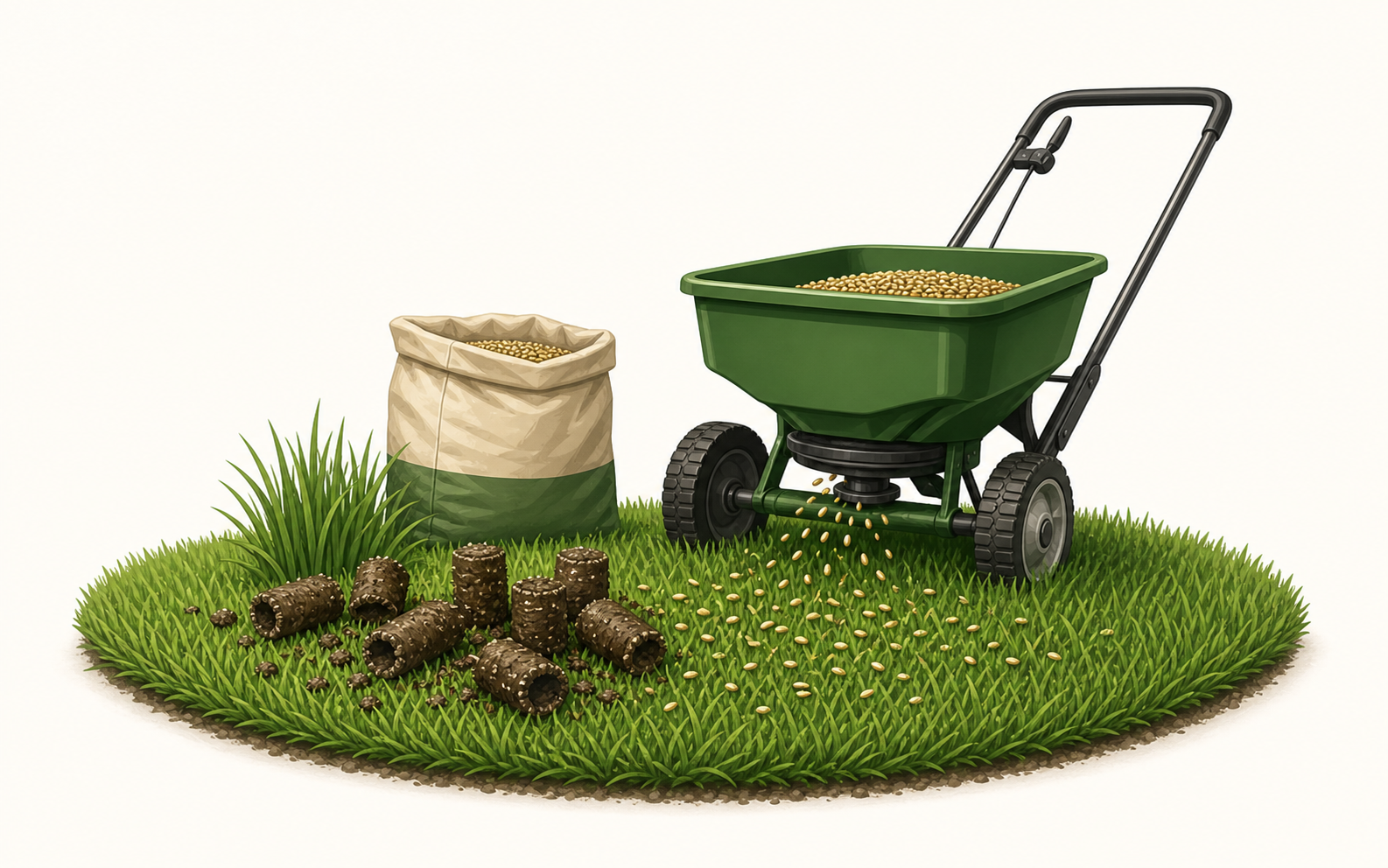
Utah State University Extension explains that aeration removes plugs of turf and soil. This opens channels for air, water, and nutrients to move into the soil. It can also help reduce compaction and support thatch breakdown.
Aeration may be useful where soil is packed down, water runs off, or the lawn has heavy use. It is not a substitute for working sprinklers or steady care.
Timing Matters
USU's northern Utah calendar lists aeration for cool-season grasses in spring and again in early fall timing. It also notes that aeration should line up with active grass growth.
For overseeding cool-season grasses, USU lists spring and fall windows, with late summer to early fall often being strong for establishment before the next summer heat.
Seed Needs Follow-Up
Overseeding works better when seed has soil contact and steady moisture. If the sprinkler system misses bare spots, new seed may struggle. If the yard is not watered after seeding, results may be limited.
Before overseeding, check dry spots, sprinkler heads, leaks, and coverage. A simple sprinkler check can protect the work.
Practical Checklist
- Look for compacted soil, runoff, bare patches, or thinning turf.
- Check sprinkler coverage before adding seed.
- Plan around spring or fall timing for cool-season grasses.
- Confirm that the lawn can be watered after overseeding.
- Keep traffic lower while seed is trying to establish.
- Set honest expectations based on soil, weather, water, and care.
When To Call For Help
Call for help if the lawn is compacted, thin, patchy, or hard to water evenly. We can help decide whether aeration, overseeding, sprinkler checks, cleanup, or mowing changes should come first. See our aeration and overseeding services or reach out through the contact page.
What Photos To Send
Text photos for a clear quote. Send the front yard, back yard, dry spots, bare patches, sprinkler heads, leaks, overgrowth, and problem areas. Tell us if the lawn has pets, heavy shade, or heavy foot traffic.
FAQ
Will aeration fix all dry spots?
No. Dry spots can come from sprinkler coverage, leaks, pressure, soil, shade, or watering settings.
When is overseeding best in northern Utah?
USU lists spring and fall windows for cool-season grass overseeding. Fall is often a strong time for establishment.
Do I need to water after overseeding?
Yes. Seed needs steady moisture. Results are limited if the lawn cannot be watered.
Can you guarantee a perfect lawn?
No. Results depend on weather, watering, soil, seed, and ongoing care.