
Sprinklers
Dry Lawn Spots And Sprinkler Checks In Utah
A dry spot can show up even when the sprinklers run on schedule. That does not always mean the lawn is failing. It may mean water is not reaching that area, soaking in, or staying long enough to help.
Before you replace grass, start with a simple sprinkler check. It is often the clearest first step.
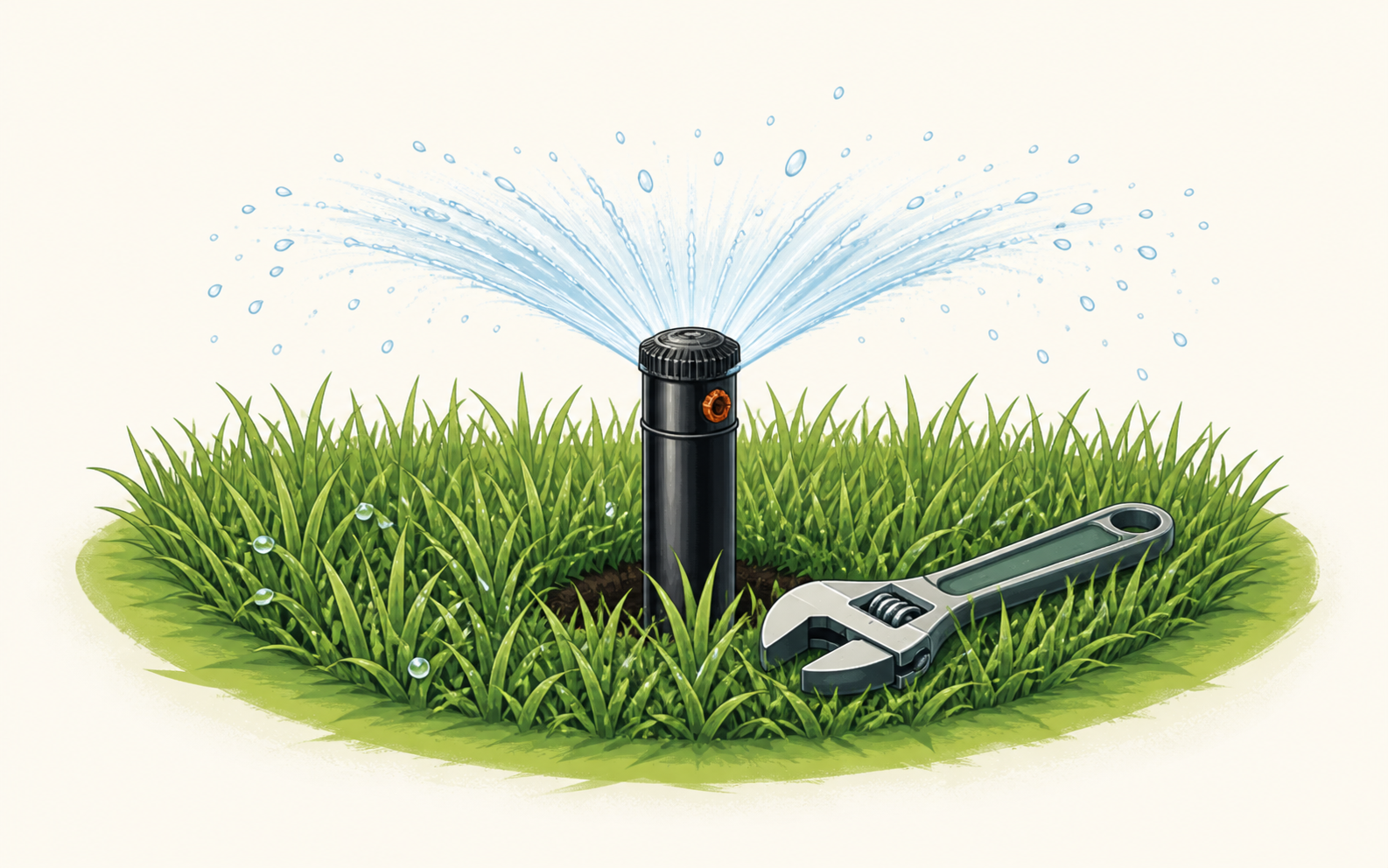
Common Causes
Dry spots may come from tilted heads, clogged nozzles, broken heads, low heads, pressure issues, leaks, blocked spray, poor coverage, or timer settings. A head can look fine when it is off and still miss the lawn when it runs.
EPA WaterSense notes that broken heads, leaks, spray direction, and controller settings can waste water and leave poor coverage. USU also recommends checking for clogged, misaligned, tilted, buried, leaking, or misting heads.
Run A Zone Test
Turn on one zone at a time. Stand where the dry spot is and watch what reaches it. Look for heads that do not pop up, nozzles that spray weakly, and water blocked by grass or shrubs.
If nearby areas get soaked while one area stays dry, the problem may be coverage. If water runs down the sidewalk, the issue may be runoff or slope. If water pools near a head, the system may have a leak.
Check The Timer Last
It is easy to add minutes to the timer. But that can overwater one part of the lawn while another part still stays dry. Use local watering guidance as a baseline, then check the system itself.
Slow the Flow shares weekly watering guidance for Utah counties. USU also describes simple catch-cup testing for Salt Lake County to compare how much water lands in different parts of a zone.
Practical Checklist
- Run the sprinkler zone that covers the dry spot.
- Watch whether water reaches the dry area.
- Look for clogged, broken, tilted, low, or blocked heads.
- Check for misting, pooling, overspray, and runoff.
- Compare dry areas with soggy areas in the same zone.
- Take photos before changing the timer.
When To Call For Help
Call for help when the dry spot stays after a simple zone test, heads need repair, pressure looks wrong, or the timer is hard to understand. We can check the sprinkler system and suggest a practical next step. See our services or reach us through the contact page.
What Photos To Send
Text photos for a clear quote. Send the dry spot, nearby sprinkler heads, timer settings, leaks, valves, blocked spray, and problem areas. A short video of the zone running can help too.
FAQ
Should I replace the dry grass first?
Not usually. Check water coverage first. New grass will struggle if the sprinkler problem stays.
Can one bad head cause a dry spot?
Yes. A clogged, tilted, broken, or blocked head can leave a clear dry area.
Why is one side wet and the other side dry?
The zone may have poor coverage, pressure problems, blocked spray, or a leak.
Can TAKE HOME diagnose it from photos?
Photos help us give a clearer first quote. Some issues still need an on-site check.