
Sprinklers
Spring Sprinkler Startup In Salt Lake County
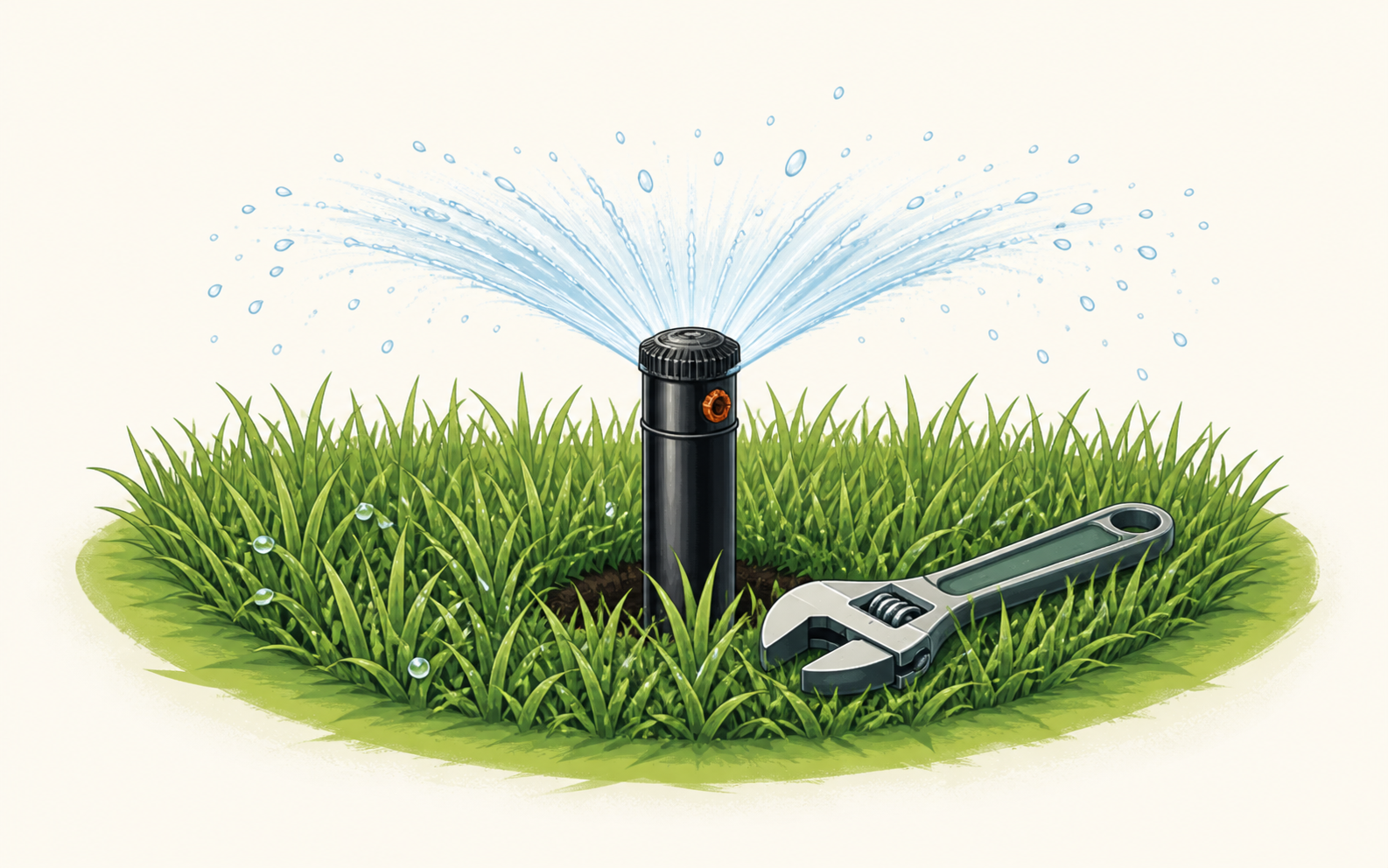
Spring sprinkler startup should be slow and careful. Do not turn everything on and walk away. Run one zone at a time. Watch the heads. Listen for leaks. Look for water going where it should not go.
Utah State University Extension recommends checking controllers, valves, heads, leaks, and spray patterns before the season gets going. EPA WaterSense gives the same kind of practical advice: inspect, connect, direct, and select.
Start With The Timer
Check the controller before you run the system. Make sure the time and day are right. Look for loose wires, old batteries, and settings from last year. Spring and fall usually need less water than hot summer weeks.
Before you set a fixed schedule, check local watering guidance. Slow the Flow shares weekly watering guidance based on Utah weather and local conditions. Salt Lake City also offers water checks for properties in its service area. That program does not apply to every city, so check your own city or water provider first.
Run One Zone At A Time
Turn on one zone and walk it from end to end. Look for clogged, broken, tilted, buried, leaking, or misting heads. Watch for heads blocked by grass, plants, fences, or yard items.
If water sprays the sidewalk, driveway, house, or street, the head may need adjustment. If water mists into the air, pressure may be too high. If water pools near a head or valve, there may be a leak.
Look Before You Add Water
A dry lawn does not always need more minutes on the timer. It may need a broken head replaced, a nozzle cleaned, or a zone adjusted. A simple sprinkler check helps you avoid wasting water while still caring for the lawn.
USU notes that irrigation systems should be checked before use each spring and during the growing season. Monthly checks can catch damaged or clogged heads before they become bigger problems.
Practical Checklist
- Open the controller and check time, date, battery, and visible wiring.
- Clear dirt and debris from the controller area and valve boxes.
- Turn on one zone at a time.
- Look for clogged, broken, tilted, buried, leaking, or misting heads.
- Check whether water reaches the lawn instead of hard surfaces.
- Use local watering guidance before setting the weekly timer.
When To Call For Help
Call for help if a zone will not turn on, a valve keeps leaking, heads do not pop up, water pressure looks wrong, or dry spots stay after simple checks. We can help with sprinkler startup, maintenance, repair, and installs. See our sprinkler services or send photos through the contact page.
What Photos To Send
Text photos for a clear quote. Send sprinkler heads, the timer, valves, dry spots, leaks, and any problem areas. Wide photos help us understand the full yard. Close photos help us see the part that needs attention.
FAQ
Should I turn on every zone at once?
No. Run one zone at a time so you can see what each zone is doing.
Why is one head misting?
Misting can point to pressure issues or a damaged part. Take a photo or short video while the zone runs.
Should I use last year's timer settings?
Use them only as a starting point. Weather, season, lawn condition, and local guidance should shape the schedule.
Can TAKE HOME set the timer?
We can help check the system and talk through practical settings. Watering needs still change through the season.